Free on-site estimatesWritten price up frontCall or text 7 days a week
Serving High Point, Jamestown, Archdale & the Triad
Large Tree Removal in High Point, NC | Big Oaks And Pines
Trunk diameter, total height and canopy spread are the three numbers that drive a large tree removal, and a mature willow oak or loblolly pine can carry a lot of all three. High Point neighborhoods like Emerywood hold old, wide hardwoods that were planted generations ago. Taking one down is a rigging job, not a single cut, because the mass has to come apart in controlled pieces.
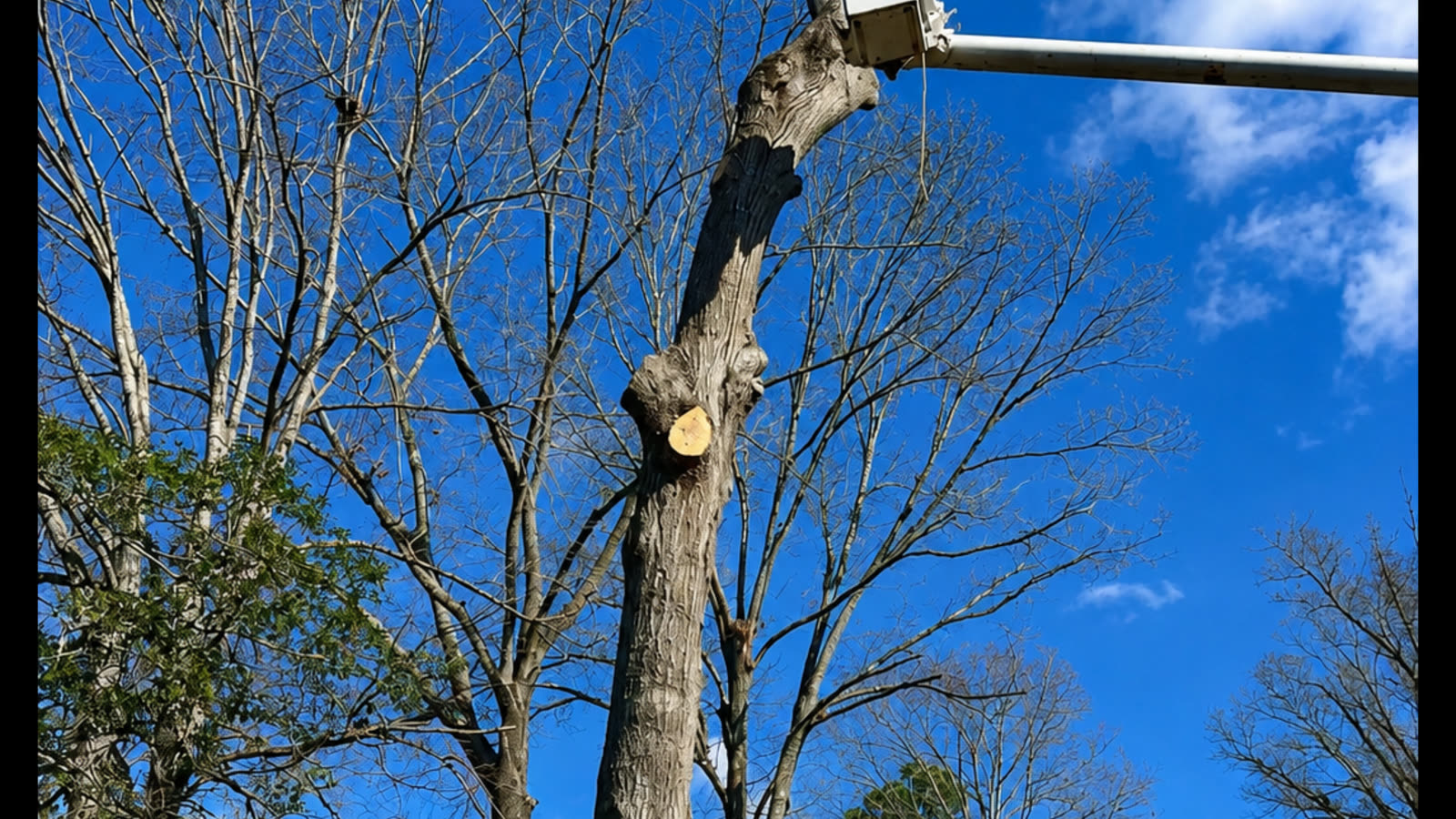
A big tree removal is measured work. The crew that comes out climbs or works from a lift, removes limbs in sections, then takes the trunk down in rounds sized so nothing overloads the ropes or the ground. Removing a large oak costs several times what a small ornamental does, because the diameter, height and spread all add weight and time. Where the space is too tight for roping, a crane becomes the safer method.
How Much Does Large Tree Removal Cost in High Point, NC?
What changes
Effect on your price
Trunk diameter and height
The single biggest driver. More wood and more height means more time on the saw and more to control on the way down.
Canopy spread
A wide crown is more cutting and far more cleanup than a narrow one of the same height.
Rigging or a crane
When the safe method is a crane or heavy rigging rather than a straight fell, the equipment and the extra hands show up in the number.
What sits underneath
A tree in the open is felled. One over a roof, fence, pool or power lines is lowered in sections, and that rigging is where the price moves most.
Access for equipment
A back yard a chipper, truck or crane cannot reach means the wood comes out by hand, which adds labour to the exact same tree.
Health of the wood
Dead, hollow or storm-loaded wood is unpredictable and more dangerous to cut, so a decayed tree prices above a sound one of the same size.
Stump grinding
Priced as its own line. Removal leaves a low stump; grinding it below grade is optional and quoted separately.
Every job is priced on site. We look at the tree, the lean, the health of the wood and the drop zone, and put a written price in your hand before any cutting starts.
What's Included
Measurement of diameter, height and spread
Climbing or lift access to the canopy
Sectional limb removal on ropes
Trunk taken down in controlled rounds
Large wood bucked and hauled or left on request
Written price after the on-site measure
How a Large Tree Removal Job Goes, Step by Step
1
Measure and plan
The crew reads diameter, height and spread to size the rigging.
2
Access the canopy
A climber or lift reaches the limbs from the top down.
3
Section the limbs
Branches are cut and lowered on ropes in manageable pieces.
4
Drop the trunk
The main stem comes down in rounds sized for safe handling.
5
Process and haul
Wood is bucked, brush is chipped, and the site is cleared.
When to Call
A large mature oak or pine is declining
A big trunk leans or has a cracked union
Heavy limbs overhang the house or neighbor
A large tree has to go for construction
Where we cover
Large Tree Removal across High Point, Jamestown, Archdale, Trinity, Thomasville, Lexington, Sophia, Randleman, Denton, Pleasant Garden and Sedgefield.
Common Questions
What counts as a large tree?⌄
It is more about diameter and height than a strict cutoff. A wide willow oak or a tall loblolly pine with a big canopy needs sectional rigging rather than a single fell. The bigger the three measurements, the more time and gear the job takes.
Why does a big oak cost so much more than a small tree?⌄
Weight and time. Trunk diameter, height and canopy spread all multiply the mass that has to be cut, rigged and hauled. A large oak can carry many times the wood of a small ornamental, and every section has to come down under control.
Do you always need a crane for a big tree?⌄
No. Many large trees come down by climbing and roping sections. A crane is chosen when the yard is too tight for a drop zone or the limbs hang over a roof. The crew picks the method that is safest for your specific tree.
Can you save a large tree instead of removing it?⌄
Sometimes. If the issue is a few weak limbs or a repairable crack, pruning or cabling may extend its life. The crew will tell you honestly whether removal is the only safe option or whether the tree can be kept.